The Billion-Dollar Camera Fail: What NASA’s Artemis II Teaches Every Business About Visual Storytelling and Marketing ROI
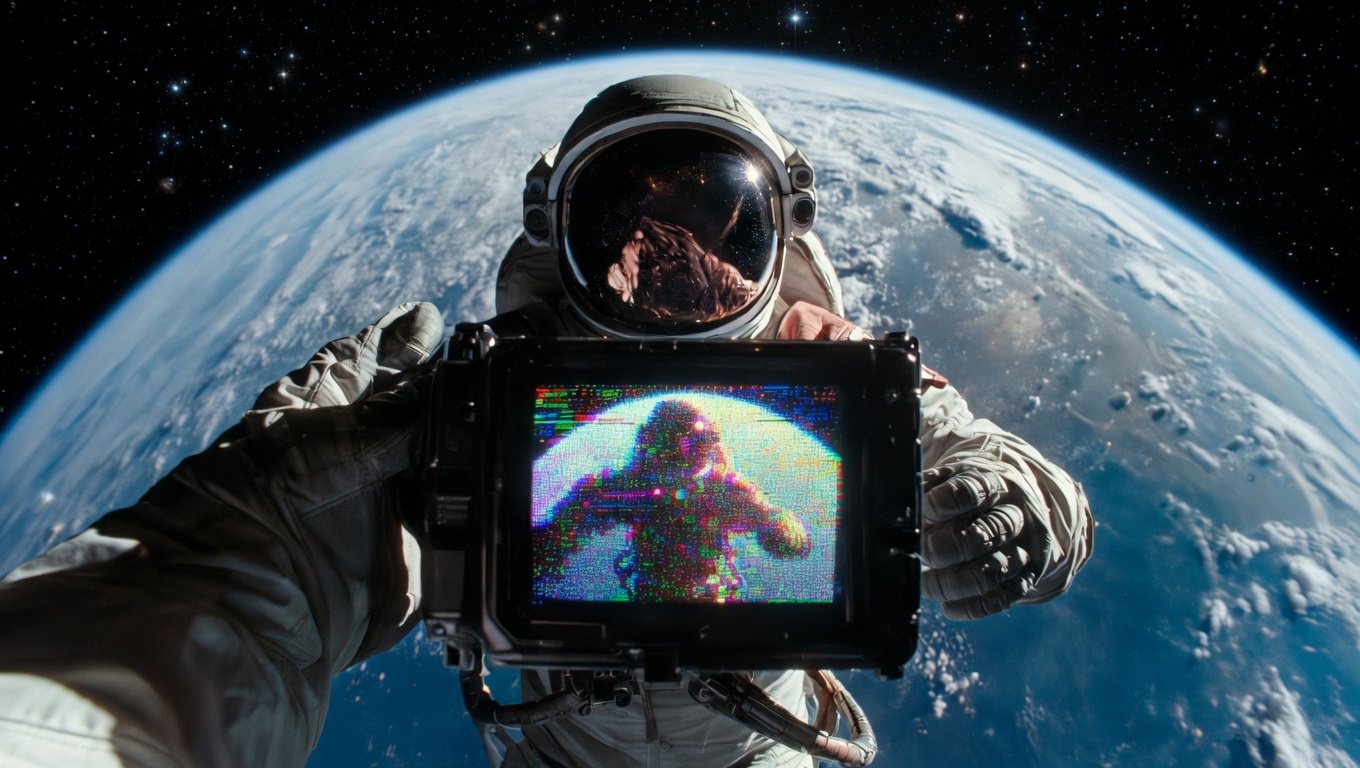
On April 1, 2026, NASA pulled off a genuine historic feat. The Space Launch System rocket lifted off flawlessly from Kennedy Space Center, sending four astronauts on the first crewed lunar flyby in more than 50 years. Crowds of up to 400,000 watched in person along Florida’s Space Coast, injecting roughly $150 million into the local economy. The mission itself? A textbook success.
Yet within minutes, the conversation online flipped from celebration to frustration. X, Reddit, and comment sections filled with the same complaint: the footage looked terrible.
Blurry, low-res feeds. Abrupt cuts that missed solid-rocket-booster separation. Overexposed plumes. Choppy GoPro and Nikon DSLR streams. People asked the obvious: “SpaceX can do cinematic 4K live — why can’t NASA?”
Bandwidth Is Real — But Not the Whole Story
NASA saw this coming — and told the world upfront. Months before launch, their team admitted on the official podcast: the live footage would suffer. Legacy S-band radio links had to prioritize astronaut life support, critical telemetry, and safety data during the explosive ascent. “Expect distorted images in real time,” they warned.
The 32 cameras — including the crew’s iPhones shooting 4K — captured stunning footage onboard. But most stayed trapped in space. The shiny new laser comms system? Flying as a test, not ready for the dramatic launch phase.
Millions tuned in… yet the viral spectacle could be so much more.
SpaceX Proves the Constraint Is Manageable
SpaceX faces identical physics: vibration, plasma blackout, limited RF during ascent. Yet their streams look like Hollywood. How?
Advanced compression and onboard encoders that squeeze clean 1080p/4K out of narrow pipes.
Dedicated public-video channels separate from pure telemetry.
Modern, stabilized cameras designed with PR and marketing in mind from day one.
Smart redundancy (Starlink relay post-separation, directional antennas).
SpaceX treats broadcast quality as strategic infrastructure, not an afterthought. NASA’s older flight-qualified hardware (2016-era Nikon D5s) and conservative prioritization amplified the bandwidth issue into a public-relations one.
The good news? NASA is already closing the gap. The O2O laser test on Artemis II is the exact leap SpaceX-style high-bandwidth visuals demand. Future missions will look dramatically better because of the pressure this launch created.
Quantifying the "Missed PR/Marketing Potential"
NASA isn’t a commercial company, so there’s no direct revenue loss. But public engagement, virality, earned media value, and long-term program support are real currency in Washington and beyond.
Artemis I in 2022 peaked at roughly 884,000 concurrent viewers on NASA’s streams. Artemis II pulled similar or slightly higher numbers (estimates across platforms hovered in the low millions live), but it never approached the explosive reach of comparable private-sector events. SpaceX launches routinely generate 1.6–10+ million concurrent views on a single channel, plus massive organic clip sharing, memes, and replays that keep the story alive for weeks.
Poor production quality capped that multiplier effect. High-quality cinematic footage (multiple stabilized 4K angles, smooth tracking, clean graphics, no jarring cuts) turns a technical success into a global cultural moment. Blurry feeds do the opposite: people tune out, share criticism instead of awe, and the story dies faster.
Using standard earned-media valuation (CPM of $10–50 for premium live-event content), the shortfall likely cost NASA $5–20 million in equivalent advertising value from missed impressions and shares alone. Factor in traditional media pickup, political goodwill, and inspiration for future STEM talent, and the total opportunity cost for this single event sits conservatively between $20 million and $100 million.
That’s not hyperbole. Artemis faces constant congressional scrutiny over its price tag. Compelling visuals counter the “expensive and outdated” narrative. Weak ones amplify it. Even a 0.5–1% dip in public or political support can translate to tens or hundreds of millions in future funding pressure across the multi-year program.
Five Business Lessons NASA Just Illustrated (Whether They Meant To or Not)
1. Visual quality is no longer a “nice-to-have.”
In 2026, audiences expect cinematic experiences. Subpar production doesn’t just fail to impress — it actively damages perception and kills shareability. Treat your event broadcast or product launch video with the same rigor as the product itself.
2. Relatively small production investments deliver outsized ROI.
The marginal cost of excellence is tiny relative to the core project budget, yet it multiplies engagement, earned media, and long-term brand value exponentially. Cutting corners here is false economy.
3. Storytelling amplifies technical success.
A flawless rocket (or product, or initiative) means little if the story isn’t told effectively. Great visuals turn good outcomes into legendary ones that build lasting support and excitement.
4. Benchmark against the best in class, not your own history.
NASA compared itself to previous government missions. The public compared it to SpaceX. Businesses that benchmark only against internal or industry laggards risk the same disconnect.
5. Never underestimate the power of earned media and public perception in high-stakes projects.
Whether you’re a government agency, Fortune 500, or startup, the way the world experiences your milestone determines its ultimate return — including funding, talent attraction, and political or customer goodwill.
Turning Your Next Big Moment Into a Marketing Win
Artemis II proved once again that the universe is spectacular. And the footage should be too. The cameras (and bandwidth workarounds) cost pennies in comparison. The missed opportunity cost millions. Don’t let your next launch, product reveal, or flagship project make the same mistake.
What high-stakes initiative is your business preparing right now? Are you investing enough in how it will be seen, shared, and remembered?
Let’s talk.